Choosing Between Portable and Stationary Compressors for Your Operation
Understanding the Two Main Types of Compressed Air Equipment
When you look at the range of compressed air equipment available today, two broad categories stand out: portable units and stationary setups. Each has its own strengths, and the right choice depends heavily on the nature of your work, your air demand, and how your facility operates. This article compares the two approaches so you can decide which one fits your operation best.
Portable Compressors: Flexibility and Mobility
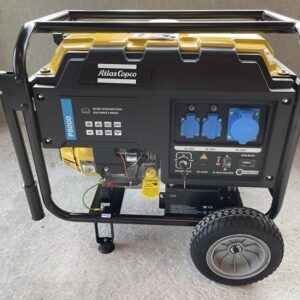
Portable compressors are built to move. They come in various sizes, from small units that one person can carry to larger skid-mounted or trailer-mounted models. Their main advantage is that they can go where the work is. If your tasks take you to different locations throughout the day or week, a portable unit lets you bring compressed air directly to the point of use.
For jobs like running pneumatic tools on a construction site, inflating tires on a fleet of vehicles, or powering equipment in remote areas, portability is a clear benefit. You do not need to run long hoses or pipes, and you avoid the pressure drop that comes with them. The receiver tank on a portable compressor is typically smaller, so the unit cycles on and off more frequently, but for intermittent use this is rarely a problem.
Portable models also tend to have simpler controls and fewer ancillaries. They are often less expensive upfront than stationary systems, and they require less permanent infrastructure. If your operation changes frequently, or if you rent your workspace, portable equipment gives you the freedom to adapt.
Stationary Systems: Power and Continuous Operation
Stationary compressors are designed to stay in one place and deliver a steady supply of compressed air to a fixed piping network. They are common in factories, workshops, and facilities where multiple workstations need air at the same time. Because they are not limited by size or weight in the same way portable units are, stationary systems can be much larger and more powerful.
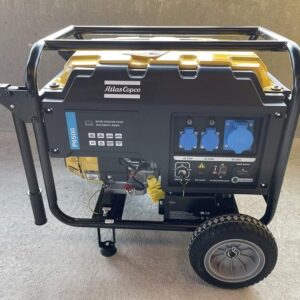
A stationary setup usually includes a substantial receiver tank that smooths out the air demand and reduces cycling. The compressor itself can run for longer periods, often with a higher duty cycle rating, which means it is built for continuous or near-continuous use. For operations that run multiple shifts or have a high and constant air demand, a stationary system is typically the better choice.
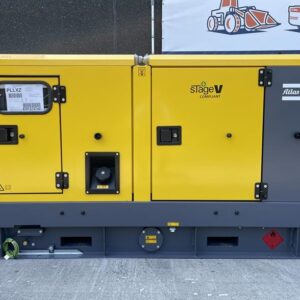
One common configuration in industrial settings uses stationary screw compressors. These machines are known for their efficiency in high-volume applications. They operate with a rotary screw mechanism that compresses air continuously rather than in pulses, which makes them well suited for plants that need a large, steady flow of compressed air around the clock. When your air demand is high and your facility has a permanent layout, stationary screw compressors can provide the reliability and capacity that portable units cannot match.
Key Factors to Consider
Air Demand and Duty Cycle
The most important factor in your decision is how much air you need and how often you need it. For intermittent use with long idle periods, a portable compressor is often sufficient. But if your operation runs continuously or has high peak demand, a stationary system will handle the load without overheating or excessive wear.
Duty cycle is a specification that tells you how long a compressor can run in a given period. Portable units typically have a lower duty cycle, often around 50 to 70 percent, meaning they need rest time to cool down. Stationary units, especially industrial models, are rated for 100 percent duty cycle and can run non-stop.
Operating Pressure and Airflow Rate
The operating pressure you need depends on the tools and equipment you use. Most pneumatic tools work well at pressures between 90 and 150 psi. Portable compressors can deliver these pressures, but their airflow rate is often lower. If you need a high volume of air at a consistent pressure, a stationary system with a larger pump and a bigger receiver tank will maintain that performance more reliably.
Airflow rate, measured in cubic feet per minute, tells you how much air the compressor can supply. A common mistake is to choose a compressor based only on pressure, ignoring the flow rate. If your tools demand more air than the compressor can deliver, you will see pressure drop and reduced performance. Stationary systems generally offer higher flow rates, which is why they are preferred for multi-tool operations.
Facility Layout and Permanence
If your workspace is fixed and you have the floor space for a permanent installation, a stationary system allows you to install a centralized piping network. This reduces the number of hoses you need and keeps the workplace tidier. It also lets you place the compressor in a separate room or enclosure, which helps with noise control.
Portable units, on the other hand, need to be near the work area. They can be noisy, and they take up floor space wherever they are used. If noise is a concern or if space is tight, a stationary system installed in a utility area might be the better option.
Trade-Offs and Judgment Calls
There is no universal right answer. The choice comes down to matching the equipment to your actual patterns of use. If you have a single workbench and use air tools for a few hours a week, a portable compressor is practical and cost-effective. If you run a production line with multiple stations operating simultaneously, you need the capacity and reliability of a stationary system.
Some operations start with a portable unit and later add a stationary system as they grow. That can be a sensible path, but it means you may end up with two separate systems to maintain. Planning ahead can save you that duplication.
Another consideration is maintenance. Stationary systems, particularly larger ones with more components, can require more regular attention. But they are also built for easier access to filters, oil, and other service points. Portable units are simpler but can be harder to work on because of their compact design.
Making Your Decision
Start by listing all the tasks that will use compressed air. Estimate how much air each task needs and how long it runs. Add up the total air demand and consider whether it is constant or varies through the day. If the demand is steady and high, lean toward a stationary system. If it is variable and you move around, a portable unit may be the better fit.
Also think about future growth. If you expect your operation to expand, a stationary system with extra capacity might be a wise investment now, rather than buying a new compressor later. If you are unsure, it can be helpful to consult with a compressed air specialist who can measure your actual air consumption and recommend a setup that matches your needs.
Final Considerations
Both portable and stationary compressors have their place in the world of compressed air equipment. The key is to look honestly at how you work, what your tools require, and what your facility allows. By weighing factors like air demand, duty cycle, operating pressure, and layout, you can choose a setup that keeps your operation running smoothly without wasting money on capacity you do not need or struggling with a unit that is too small.
Remember that the compressor is only one part of the system. The quality of the piping, the condition of the filters, and the maintenance schedule all affect performance. Whichever type you choose, treat it as part of a complete system and you will get the most out of your investment.